

How Seasonal Demand Impacts Photo Booth Pricing
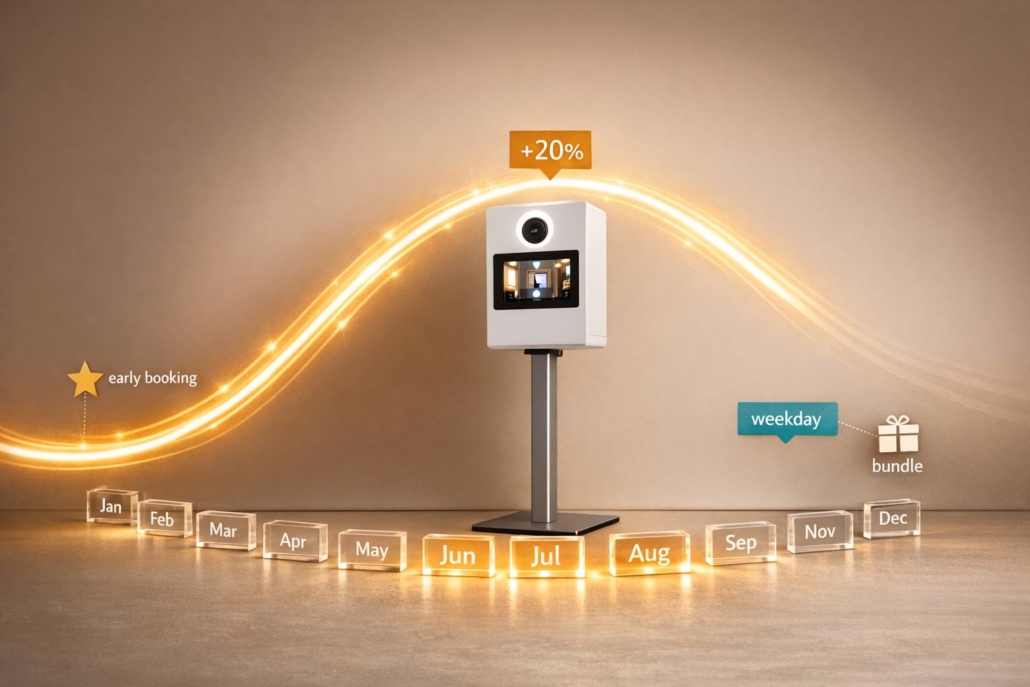
Seasonal demand heavily influences photo booth rental pricing. Busy periods like weddings (spring to fall) and holidays allow businesses to charge premium rates, sometimes 15–25% higher. For example, a $600 booth might go for $750 during peak times. In contrast, slower months (January–March, mid-summer) often require discounts of 10–20% to maintain bookings. Operators also adjust pricing based on local demand, event types, and regional costs. Strategies like weekday discounts, early booking incentives, and package deals help balance revenue year-round. Success lies in aligning pricing with demand cycles while covering operational costs.
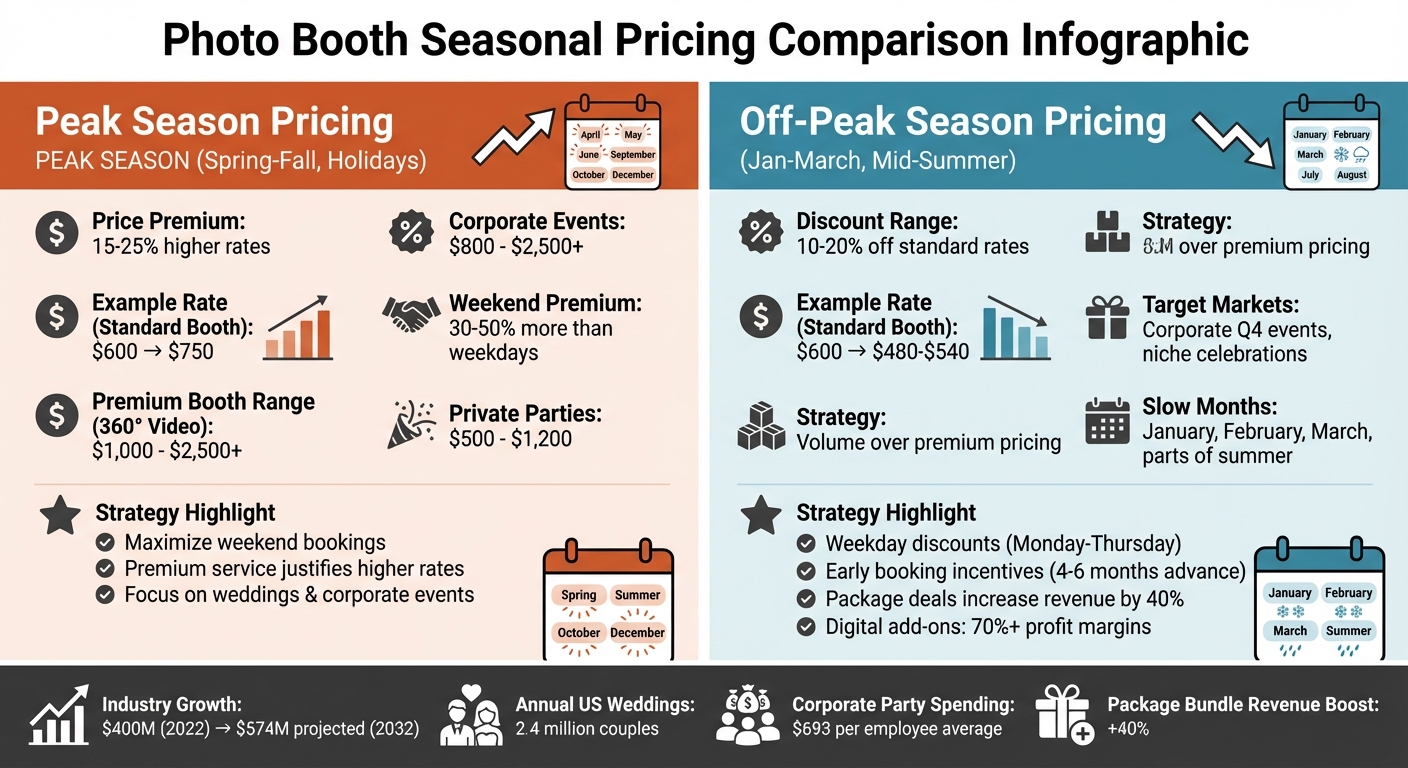
Peak vs Off-Peak Photo Booth Pricing: Seasonal Rate Comparison
Pricing Strategies For Your Photo Booth Business | Photo Booth Podcast
sbb-itb-388abf8
How Seasonal Demand Affects Photo Booth Pricing
Seasonal trends don’t just influence when people book photo booths – they also play a big role in how much they’re willing to pay. When demand spikes, prices follow suit. But during slower months, businesses often lower rates to keep the bookings coming.
Peak Seasons: Higher Demand Means Higher Prices
Wedding season and the holidays are prime time for photo booth rentals. During these busy months, competition for weekend slots drives prices up. Some operators can even recoup their initial investment in just one busy month. For example, a premium wedding photo booth rental can bring in as much as $700 for a 3-hour booking. With around 2.4 million couples tying the knot annually in the U.S., demand during these peak periods remains steady.
Typically, rentals during high-demand months cost about 15% to 25% more than usual. A booth that might rent for $600 on a regular weekend could go for $750 or more during peak times. Advanced options like 360 video booths command even higher prices, ranging from $1,000 to over $2,500. Corporate events and weddings, in particular, justify these higher price points. Corporate bookings often range from $800 to $2,500+, while private parties fall between $500 and $1,200.
But when demand dips, pricing strategies shift.
Off-Peak Seasons: Lower Demand Creates Discount Opportunities
The slower months – like January through March and parts of the summer – see fewer weddings and events. To attract clients during these times, many rental companies offer discounts. As Olisa Obiefuna of CLTphotoboothMagik explains:
"Winter months, excluding the holiday season, and early spring are often considered off-peak for events, and many rental companies offer discounts to attract clients during these slower periods".
Discounts during these months typically range from 10% to 20% off standard rates. For example, a $600 open-air booth might drop to $480–$540 in February. Some companies also adapt by offering digital-only packages, which cut down on costs like prints and upkeep. These adjustments help businesses stay active, keeping their staff and equipment in use even when bookings slow down.
Setting Competitive Rates During Peak Seasons
As we continue exploring how seasonal demand shapes pricing trends, let’s dive into strategies for making the most of peak seasons. The goal? Set rates that maximize revenue while keeping bookings steady – even on less popular days. By focusing on peak periods, you can fine-tune your pricing to boost profits without sacrificing your calendar’s balance.
Leveraging Weekend Demand
Weekends are prime real estate for bookings, and they naturally command higher rates. For example, weddings and corporate events often bring in 30% to 50% more than private parties. During peak seasons, these premiums can climb even higher. A booth that rents for $800 on a weekday might easily bring in $1,200 or more on a Saturday in October.
"Raising your rates isn’t greedy – it’s necessary for growth. If you continue delivering great service, your best clients will understand and stay loyal".
To justify premium pricing, focus on delivering exceptional value. Offer professional attendants, custom branding options, and high-quality props to ensure your clients feel the investment is worth every penny.
Offering Discounts for Weekday Bookings
While weekends are the big earners, weekdays often go underutilized. That’s where strategic discounts come in. Offering lower rates for Monday through Thursday bookings can attract clients who are budget-conscious but still want professional service. This approach also helps you fill your calendar earlier, reducing the stress of last-minute bookings.
"Be the first booked in slow season, the last booked in peak season".
By securing weekday bookings ahead of time, you can avoid competing with bargain hunters scrambling for last-minute deals. Meanwhile, your premium weekend rates remain intact.
Creating Early Booking Incentives
Encouraging early commitments not only ensures a steady flow of revenue but also helps you plan your schedule more effectively. Instead of simply slashing prices, add value for clients who book 4–6 months in advance. For instance, include extras like additional hours (typically worth $100–$200 per hour) or premium backdrops.
Start marketing holiday parties as early as July or August to get ahead of your competitors. For fall and winter events, use the slower summer months to reconnect with past clients. Offer exclusive early-reservation perks, such as $50 off or a free GIF feature upgrade.
"Early bird specials can be a powerful marketing tool… These special offers not only encourage early bookings but also help you manage your schedule efficiently".
Adding a photo booth to an event package can boost total revenue by about 40% – turning a $1,500 booking into $2,100. Early booking incentives can help lock in that extra income long before the busy season hits.
Generating Revenue During Off-Peak Seasons
When the busy season winds down, it’s time to shift gears and rethink your approach. Off-peak months, like winter and early spring, require a focus on volume and visibility rather than premium pricing. The goal? Keep the cash flowing and build lasting relationships that will benefit your business throughout the year.
Offering Off-Season Discounts
During slower months, adjusting your pricing can make all the difference. For example, a booth that rents for $1,000 in October might go for $800 to $900 in February. This pricing strategy reflects market realities while keeping your services competitive and your equipment in use.
"Off-season wedding photo booth rental pricing provides significant value opportunities for flexible couples, with winter and early spring dates often offering 10–20% discounts from standard rates." – Feature Booth
Discounts like these not only attract bookings but also open the door to offering value-added packages that can further boost your revenue.
Creating Package Deals and Add-Ons
Bundling services is a smart way to increase value and revenue. For instance, pairing a photo booth with a DJ or lighting setup can raise total revenue by 40%. Digital add-ons, like custom-branded templates or social media sharing features, can deliver profit margins exceeding 70%. Offering tiered packages – such as Basic, Premium, and Ultimate – encourages clients to choose mid-tier options, which often have the highest profit margins.
"Smart operators bundle photo booth services with complementary offerings. This approach maximizes perceived value while increasing actual revenue." – PicBox Company
By packaging services creatively, you can appeal to a broader audience and make your offerings more attractive during slower periods.
Focusing on Niche Markets During Slow Periods
When wedding bookings dip in winter, other markets can pick up the slack. Corporate events, for example, are a goldmine. Companies spend an average of $693 per employee on year-end parties, and corporate bookings often command 30–50% higher rates than private events. Events like Q4 celebrations, bonus announcements, and product launches can be particularly lucrative.
Don’t overlook other opportunities like school events (proms, fundraisers) or community celebrations such as Lunar New Year or Rosh Hashanah. Repurposing holiday-themed equipment for "Winter Wonderland" setups can keep your offerings fresh well into March. To secure these bookings, start marketing niche packages as early as July or August.
Regional Differences in Seasonal Demand and Pricing
Where you operate plays a big role in determining your pricing. For instance, a photo booth rental might bring in $1,200 in San Francisco but only around $900 in Nashville. These differences stem from varying local demand, operating expenses, and what clients in each area expect.
Adjusting to Local Event Schedules
Local events can create prime opportunities for higher pricing if you know how to plan for them. In Charlotte, NC, demand tends to peak during spring, fall, and December. Meanwhile, tech-heavy cities like San Francisco see a surge in corporate bookings during major product launches and conferences. In fact, corporate bookings in these areas have jumped by 150% in recent years. Similarly, business hubs like Dallas and Fort Worth are seeing increased demand for high-tech setups like AI photo booths and 360° experiences (learn what a 360 photo booth is and how it works).
"Event season in Charlotte gets busy – especially spring, fall, and December." – CLTphotoboothMagik
Urban centers often command higher prices due to the sheer volume and scale of events. For example, photo booth rentals in New York typically range from $300 to $500 per event, while in Atlanta, rates are closer to $150 to $300. These pricing differences often reflect the prevalence of high-budget events like weddings, corporate functions, and entertainment industry gatherings in larger cities.
On top of event timing, the costs of operating in different regions also play a big role in shaping your pricing strategy.
Accounting for Local Expenses
Your pricing should cover more than just the equipment – it needs to reflect the actual costs of running your business in your specific area. Urban operators face unique challenges, such as steep parking fees, tricky venue access, and higher insurance costs, which rural operators might avoid. In major cities, professional open-air photo booth services often start at $800, partly due to these added logistical hurdles.
"Urban locations might have higher base costs due to increased demand and higher operating expenses." – Olisa Obiefuna, CLTphotoboothMagik
When working outside your usual service area, it’s important to include travel and logistical fees in your quotes. Consider setting up pricing zones to account for travel expenses, especially in sprawling areas like the Bay Area or Los Angeles. Additionally, venues with difficult load-ins, strict insurance requirements, or tight setup schedules – common in urban centers – should also factor into your pricing. Accounting for these costs ensures your profit margins stay intact.
Conclusion
Successful photo booth operators adapt their pricing strategies to match seasonal demand. For instance, during high-demand periods like spring weddings or December holiday parties, charging premium rates makes sense. On the flip side, in slower months like January or mid-summer, offering lower prices early can help lock in bookings and keep business steady.
"Lock in early bookings during slow seasons to maintain steady revenue, and reserve premium pricing for peak times."
To stay ahead of competitors, start holiday party promotions as early as July or August. Use the quieter months to upgrade your equipment, experiment with new pricing tiers, and refine your marketing strategies for the next busy season. This approach ensures a consistent flow of revenue throughout the year.
When setting prices, remember to account for all costs – equipment depreciation, insurance, software, and local expenses. Smart pricing is key to maintaining solid profit margins.
The photo booth industry is on the rise, growing from $400 million in 2022 to a projected $574 million by 2032. By mastering seasonal pricing strategies, operators can tap into this growth while staying profitable year-round. With the tools and support from Photo Booth International, you can position your business for long-term success in every season.
FAQs
How far in advance should I book to avoid peak-season pricing?
Booking your photo booth 6 to 12 months in advance is a smart move, especially during high-demand periods like weddings or holidays. This not only helps you lock in your preferred date but also gives you access to pricing options that fit your budget. Planning ahead can save you the stress of last-minute arrangements and ensure everything runs smoothly for your event.
What’s the best way to set weekday discounts without losing profit?
To create weekday discounts without sacrificing your profits, start by taking a close look at your costs and profit margins. This helps you understand how much room you have to offer discounts without hurting your bottom line. Consider using tiered pricing or offering add-ons to keep the value of your services intact. Instead of blanket discounts, focus on selective offers like discounts for early bookings or bundled packages.
Before rolling out any discounts, set clear profit goals to avoid undervaluing what you provide. These thoughtful adjustments can help you attract customers during slower times while keeping your overall profitability intact.
How do I price travel and venue logistics in different regions?
When figuring out pricing for travel and venue logistics, it’s essential to account for regional factors like transportation, fuel, setup, and labor costs. These can differ significantly depending on the location. For example, big cities often come with higher expenses, which may require you to charge more, while rural areas might offer a chance to keep rates lower. It’s also smart to adjust your pricing to reflect seasonal demand and local market trends – this way, you stay competitive while ensuring your logistics expenses are fully covered.

