
Blog/September 23, 2026
Open Air Photo Booths: Cost, Features, and How to Choose
Open-air photo booths work for parties that want an open setup, not a closed booth. See cost, features, and how to pick one for your photo booth business.
Do you run a photo booth business? Or are you about to start one?
You may be looking at open setups, closed booths, mirrors, and 360 gear. This guide is for you.
You will learn what an open air photo booth is. You will see what drives cost. You will learn how to pick gear that fits real parties. No fluff.
By the end you will know:
- How open-air booths work
- Which features matter on event night
- How a photo booth attendant and a photo booth operator change the job
- How open-air stacks up next to 360
- When buying new beats a used photo booth for sale ad
What an open air photo booth is (and is not)
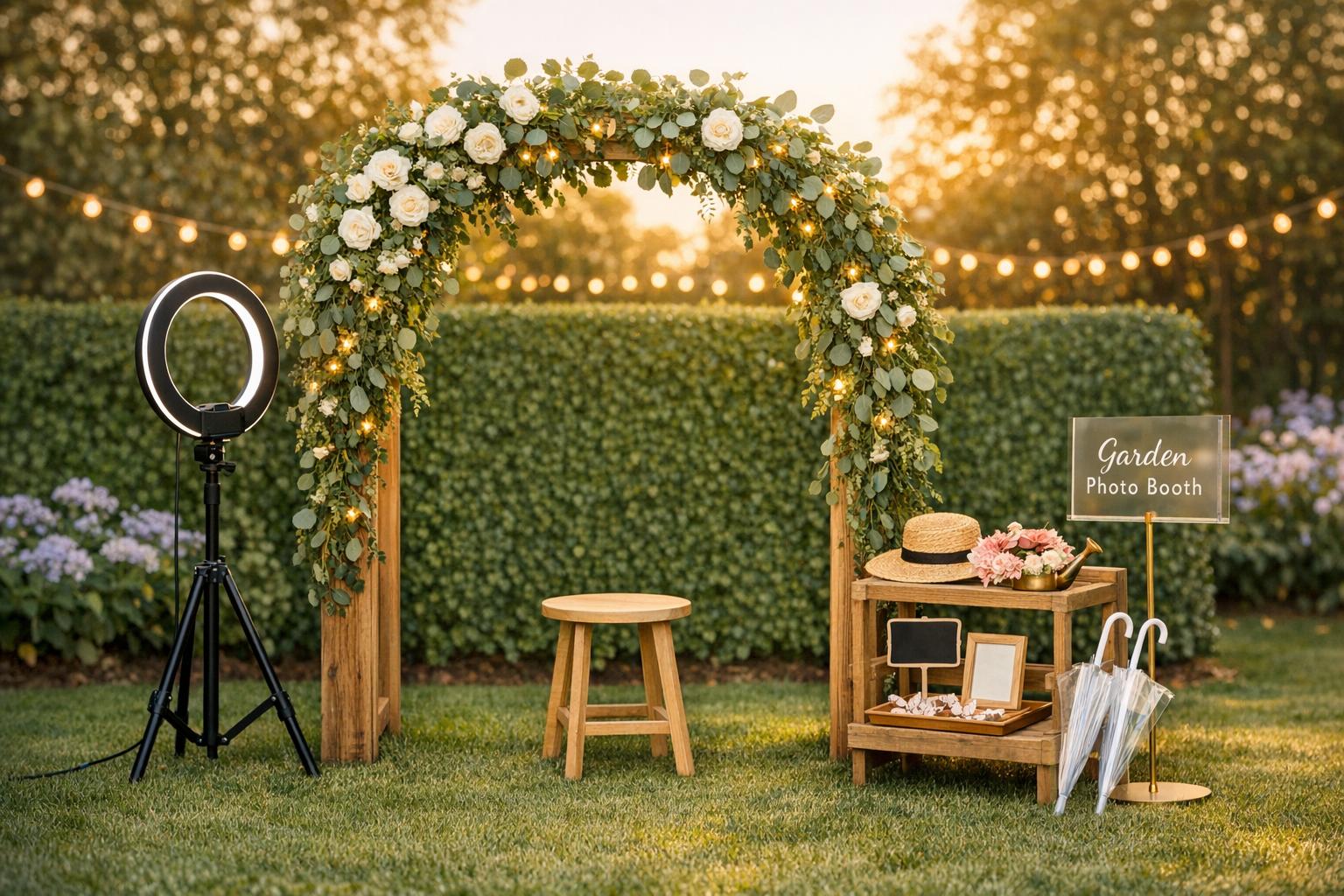
An open air photo booth sits in the open. It has a camera. It has a screen. It has lights. It has props. It does not have a closed box.
Guests walk up. They pose. They get prints or digital shares. They do not climb into a cabin.
That open layout is the whole point. Groups fit better. Guests who use a wheelchair fit better. The party can still see the fun.
Closed booths still have a place. Some clients want privacy. Some want a dark, themed room. Many weddings, work parties, and school events want the open feel instead.
Open-air is not the same as a 360 photo booth. A 360 setup spins a camera around a guest for video. An open air photo booth is mostly still photos. It may also do GIFs or boomerangs. Different product. Different pitch. Different work for your crew.
Who open-air booths serve best
Open-air setups work well when:
- Groups matter. Families and bridal parties want to stand together. They do not want to squeeze into a tiny box.
- The room is open or packed. Ballrooms. Tents. Trade floors. Hosts often want a setup that does not block the view.
- You want faster turns. No door. Less wait in a tight line.
- Access matters. Wheelchairs. Walkers. Guests who do not like closed spaces. Open layouts help all of them.
Open-air is a weak fit when the client wants a private “phone booth” feel. It is also a weak fit when they want a dark room for fancy light tricks. Then a closed booth or a mirror photo booth may fit better.
Core features that actually matter
Skip the buzzwords. On rental day, these parts decide if the night goes smooth—or if you fight the gear all night.
Camera and photo quality
You need sharp focus. You need decent results in low light. You need software that does not freeze mid-party.
Guests forgive plain props. They do not forgive blurry prints. They do not forgive a dead screen.
Lighting you can control
Open rooms fight you. Chandeliers. Window glare. DJ color washes. A strong ring light or a light you can aim keeps faces even.
If you want a ring-light setup, look at something like the Cloee ring light photo booth. Compare it to a bare “camera on a stick” kit. Bare kits leave you fighting venue light all night.
Screen and buttons
Touch screens should be easy to read in a bright room. Guests should not need a class to use them. Your logo can sit on the screen. Clear beats clever.
Prints, digital share, and a backup plan
Pick your package early. Prints only. Digital only. Or both.
Printers add weight. They add ink cost. They can jam. Digital share (QR, email, text) cuts paper cost. But you need solid Wi-Fi—or a clear plan when Wi-Fi fails.
Always have a backup. Extra storage. A second printer if prints are the main sell. Or a clear digital-only backup if the printer dies.
Props, backdrop, and floor space
With open-air, the backdrop is the booth. Strong stands matter. Clean branding matters. A floor plan you can tell the venue matters more than a pile of silly props.
Measure your setup. Width. Depth. Power needs. How many feet guests need in front of the camera.
Software and how you send photos
Look for software that handles templates. Branding. Simple checks if you need them. Easy delivery after the event. Owner-operators win when the steps stay boring and the same every time.
Cost: what actually drives the number
We will not invent sticker prices here. What you hear in the market changes by city. It changes by brand. It changes by what is in the box—camera, printer, software, cases, training. Treat any “starts at” line as talk, not a final bill.
For an open air photo booth, cost usually breaks into:
- The gear package — camera, screen, lights, stands, cases, and maybe a printer.
- Software — pay once, pay monthly, or both. Ask what happens if the company changes plans or kills an app.
- Travel and cases — if it does not travel well, your labor cost goes up every weekend.
- Supplies — paper, ink, fresh props, backdrop wear.
- Insurance and repairs — open setups get bumped. Plan for that.
- Labor — a photo booth attendant or photo booth operator on site changes your true cost per job.
People often ask about 360 photo booth cost in the same talk. Remember: 360 platforms are a different buy. They have a platform. They have motors. They need more safety talk. They often need more space. Do not price them like the same product as open-air still photos.
If you want real package options—not guesses—get a quote on a photo booth from Photo Booth International. Compare what is included. Gear. Support. Software. Set that next to any other quote you have.
Photo booth attendant and photo booth operator staffing
Open-air looks “self-serve.” On big events, it rarely is.
A photo booth attendant is on-site help. They greet guests. They keep the line moving. They fix props. They watch kids on stands. They restart the screen when someone mashes the wrong button.
A photo booth operator often owns more of the tech. Setup. Tear-down. Printer fixes. Power plans. Talk with the client.
On many jobs, one person does both roles. That is fine—until the event is huge, the client paid for full service, or the room is chaos. Plan staff by event type:
- Drop-off / light help: only when the client accepts risk and the venue is calm.
- Normal attended: one attendant for most weddings and mid-size parties.
- Heavy jobs: two people for festivals, big work events, or nights with lots of prints and props.
Staff is a cost. Staff is also quality. Understaff an open air photo booth and you do not save money. You pay in bad reviews and broken gear.
Train whoever you send. Power and cable safety. Guest flow. Basic consent rules if you offer filters or AI tools. A simple plan for when the printer fails mid-party.
Open-air vs 360: features and cost in plain terms
| Open air photo booth | 360 photo booth | |
|---|---|---|
| Main output | Photos, GIFs, often prints | Spinning video / clips to share |
| Space | Backdrop + guest area | Clear space around the platform |
| Guest comfort | Easy for groups and mobility needs | Stand on a platform; a short brief helps |
| Typical labor | Attendant for flow + tech | Operator for safety + video flow |
| Easy upsells | Prints, albums, branded templates | Slow-mo video, custom overlays |
Neither one “wins” for every client. Open-air is often the workhorse for classic party photos. 360 is a show piece—or the main ask for clients who want shareable video.
If 360 is on your list, read what is a 360 photo booth. Then look at 360 photo booth for sale options. Compare real packages. Do not mix open-air still pricing with platform pricing.
If you focus on still photos, open-air, mirror photo booths, and ring-light systems each fill a different need. Build your mix from the events you already book. Do not chase every trend on social that week.
Used photo booth for sale vs buying new
You will see plenty of used photo booth for sale ads. Some are fine. Many are someone else’s headache with nice photos.
Risks you see again and again:
- Unknown software status — expired licenses, logins tied to the old owner, or apps that no longer get updates.
- Worn printers and batteries — the parts that fail first. Often not said clearly in the ad.
- No support path — when it breaks on Saturday night, a listing page does not pick up the phone.
- Missing cases and cables — “complete kit” that is not complete once you check the box.
- Hidden travel damage — open-air frames and screens take hits.
Buying new from a builder that still answers support costs more up front. It often costs less over a full season of rentals. You pay for a known setup. A warranty. Training. A path to parts.
Photo Booth International sells new booths—not used stock. If you compare a used listing to a new build, run a real checklist. Software terms. Spare parts. Print path. Case quality. Who you call when something fails. Then take the buy a photo booth path that matches how you run jobs.
How to choose: a simple checklist
Use this on a sales call with a vendor—or with yourself.
- Name your main event types. Weddings. Work parties. Schools. Bars. Each one stresses space and staff in a different way.
- Measure your van and storage. If it does not fit your van twice a weekend, it is the wrong kit.
- Decide print vs digital first. That choice drives printer cost, weight, and what can break.
- Ask who owns the software. License length. Device limits. Update rules. Offline mode.
- Ask for a full packing list. Camera. Lights. Stands. Backdrop. Printer. Paper path. Spare cables.
- Plan attendant coverage. Do not buy “self-serve” and then treat every job like it is self-serve.
- Compare open-air to mirror and 360 with honesty. Add products because clients ask—not because a rival posted a reel.
- Price the full job, not the toy. Gear + labor + travel + supplies + insurance = real cost.
- Get support in writing. How fast they reply. How long parts take. What training is included.
- Start with one solid open-air unit before you add more types. Simple scales. Fancy fails.
Common mistakes new open-air operators make
- Too many props. Not enough light. Guests notice faces first.
- Ignoring power. Shared venue outlets and long cable runs kill nights.
- Promising unlimited prints with no paper math. Know your cost per print before you sell “unlimited.”
- Skipping the attendant on “easy” jobs. Easy jobs get hard when the DJ turns the lights purple.
- Copying 360 pricing onto open-air (or the reverse). Different product. Different value story.
- Buying used to “save,” then spending the savings on repairs and down time.
Soft next step
If open-air fits the events you already book, look at current packages. Ask for a quote that lists what is included—gear, software, and support—so you can compare fair to fair.
Start here: get a quote on a photo booth. Browse photo booths to buy. If you are still weighing formats, keep Cloee, mirror booths, and 360 for sale in the same folder.
An open air photo booth will not fix a weak ops plan. Pair it with clear staffing, honest pricing, and gear you can support. Then it is one of the simplest ways to cover parties that want an open setup—not a closed booth.