

How To Handle Objections In Photo Booth Sales

When it comes to selling photo booth services, objections are inevitable. But the good news? Most objections are just questions in disguise. Whether it’s about price, necessity, trust, logistics, or hesitation, addressing these concerns directly can turn "no" into "yes." Here’s a quick breakdown of how to handle the most common objections:
- Price Concerns: Focus on the value your service brings – guest engagement, memories, and social media buzz. Offer financing options if needed.
- Perceived Lack of Need: Show how a photo booth solves overlooked event challenges, like creating interactions or providing free event marketing.
- Trust Issues: Build credibility with testimonials, reviews, and your track record of success.
- Event Fit: Recommend the right booth for their event type, venue, or theme, and provide customization options.
- Decision Delays: Create urgency with limited availability or time-sensitive perks.
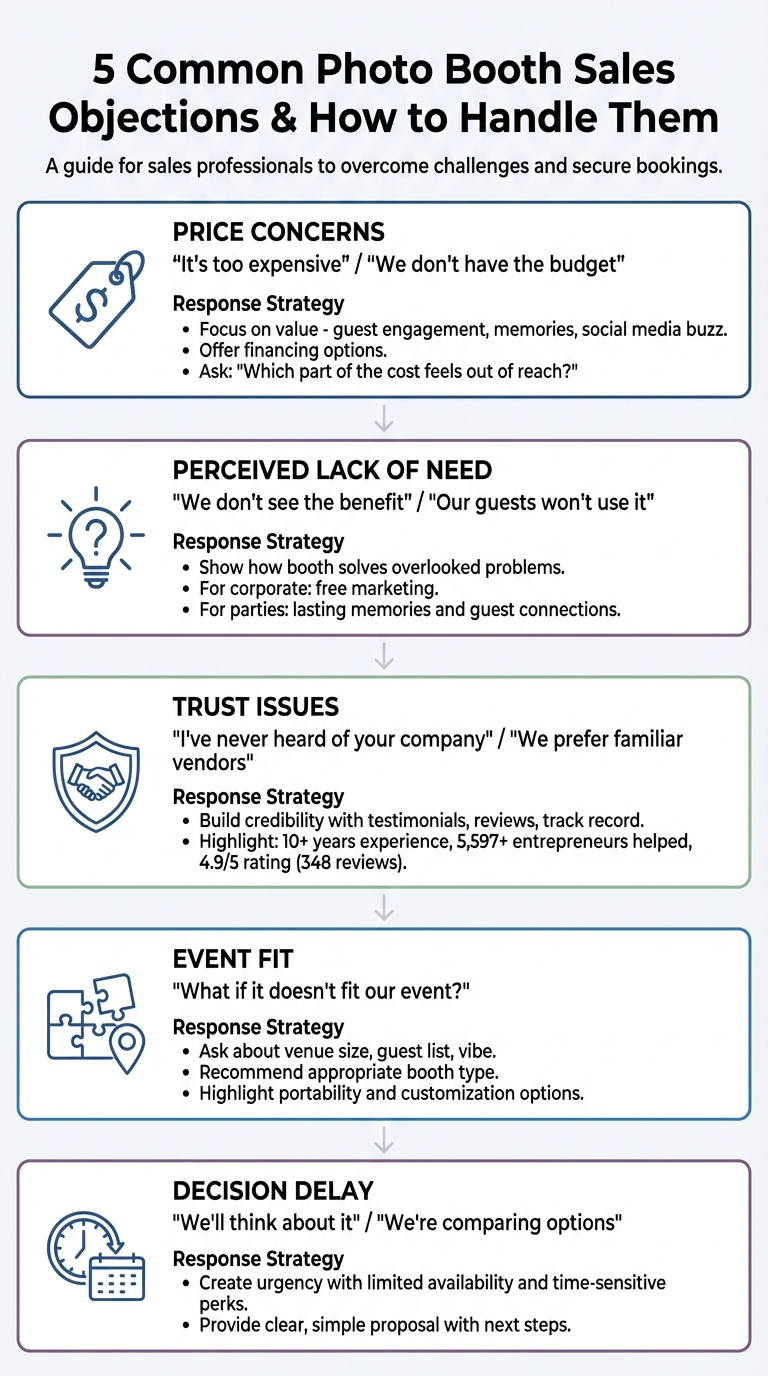
5 Common Photo Booth Sales Objections and How to Handle Them
Common Objections in Photo Booth Sales
Why Clients Raise Objections
Objections often stem from unanswered questions or uncertainties that clients have about your service. When someone says, "it’s too expensive" or "we need to think about it", they’re likely signaling that something hasn’t been fully clarified.
These objections typically fall into one of three categories: trust in the vendor, whether the product meets their needs, or how they perceive its value compared to the price. While budget concerns might seem like the obvious reason, the real issue is often a lack of understanding about what the photo booth offers. For example, corporate clients might struggle to see how it delivers a return on investment, while private party hosts may not immediately recognize how it enhances guest experiences.
Another factor is the knowledge gap. Most clients aren’t experts in photo booths. They might not know the difference between digital sharing and print options or understand the added value of having a professional attendant on-site. Using industry-specific terms without explaining them can leave clients confused, leading to objections. This gap not only creates hesitation but also highlights an opportunity to educate your audience, improving your sales approach. This is a key step in maximizing your business profit.
When you understand these underlying causes, it’s easier to see why certain objections come up again and again. Below are the five most common objections you’re likely to face in photo booth sales.
The 5 Most Common Objections
Photo booth businesses often encounter these recurring concerns:
- Price Concerns: Clients may say "it’s too expensive" or "we don’t have the budget".
- Perceived Lack of Need: Comments like "we don’t see the benefit" or "our guests won’t use it" are common.
- Trust Issues: Some clients might say "I’ve never heard of your company" or prefer sticking with a familiar vendor.
- Event Fit: Questions about whether the booth matches the venue, theme, or guest list often arise.
- Decision Delay: Phrases like "we need to think about it" or "we’re comparing a few options" signal hesitation.
sbb-itb-388abf8
How to Respond to Each Objection
Objection 1: ‘It’s Too Expensive’
When someone says your photo booth is too pricey, they’re likely not seeing its full value yet. Instead of jumping into a defense of your pricing, steer the conversation toward the bigger picture. Ask questions like, "What’s most important for your event – guest interaction, social media buzz, or creating unforgettable memories?" This helps them connect your service to their goals.
"If you bring price up in the very first conversation by first explaining what makes you different and then creating value for what you do, you will likely have few if any price objections later." – Photography Business Institute
Talk about the complete experience you offer: professional staff, high-quality photos, instant sharing options, and hours of guest entertainment. These features turn ordinary events into something extraordinary. If budget is a sticking point, mention financing options like Photo Booth International’s Astro Mirror, which starts at $557.60/month. Then, ask: "Which part of the cost feels out of reach?" This can help uncover specific concerns.
Once they see the value, it’s easier to align the booth’s benefits with their event vision.
Objection 2: ‘We Don’t Need a Photo Booth’
This objection often means they haven’t yet linked your service to what they want for their event. Many see photo booths as optional extras rather than must-haves. Your goal? Show them how your booth solves problems they didn’t even know they had.
"How does your product solve a problem people didn’t know they had? What will it add to their event that they didn’t know they were missing?" – Josh Pather, Photo Booth International
Ask about their goals: What do they want guests to remember? Then, explain how a photo booth delivers. For corporate events, shared photos double as free marketing. For weddings and parties, booths create laughter and connections that leave lasting impressions. Instead of diving into specs, share real examples of how your booth has elevated past events.
If clutter from physical prints is a concern, highlight digital-only options. Photo Booth International’s models include instant sharing, professional lighting, and interactive touch screens – making them perfect for modern events.
Objection 3: ‘I’ve Never Heard of Your Company’
When trust is a hurdle, especially for first-time photo booth clients, it’s essential to establish credibility by choosing a reputable photo booth manufacturer quickly. They’re relying on you to deliver a key part of their celebration, so build confidence right away.
Leverage Photo Booth International’s reputation. With over 10 years in the industry, 5,597+ entrepreneurs helped, and a 4.9/5 rating from 348 reviews, the company has an impressive track record. They’ve even supplied booths to Fortune 500 companies like Facebook, American Express, AT&T, and Capital One.
Mention that your equipment includes lifetime tech support, ensuring everything runs smoothly. Highlight professional touches like attorney-drafted contracts and clear terms of service. To further build trust, share testimonials, respond promptly to inquiries, and consider a short video introduction to position yourself as a reliable partner, not just a salesperson.
Objection 4: ‘What If It Doesn’t Fit Our Event?’
Concerns about logistics – whether the booth fits the venue, matches the theme, or suits the guest count – are common. Start by asking about their event details: venue size, guest list, and overall vibe (formal, casual, modern, or something else).
Once you understand their needs, suggest the best booth for the job. Photo Booth International offers options for all event types:
| Photo Booth Model | Key Features | Best Event Fit |
|---|---|---|
| Cloee Ring Light | Built-in speakers, vivid LED ring light, touch screen, highly portable | Small parties, social-media-focused events |
| Mirror 4 Flawless | Infinite touch surface mirror, elegant thin frame, DSLR camera quality | High-end weddings, luxury corporate events |
| Astro Mirror | Foldable/lightweight, modern mirror design, Microsoft Surface Pro tech | Events needing quick setup and a sleek look |
Highlight the booths’ portability and easy setup. For example, the Astro Mirror is lightweight and foldable, ideal for tight spaces or multi-location events. If aesthetics are a concern, explain how booths can be customized with branded backdrops or themed props. Show visuals from similar events to reinforce your point.
Once logistics are sorted, clients are more likely to feel confident moving forward.
Objection 5: ‘We’ll Think About It or Compare Options’
This response usually signals hesitation rather than outright rejection. The client is interested but needs a little push to commit. Your job? Create urgency without being overbearing.
Point out limited availability for event slots and offer time-sensitive perks – like a discount or bonus features such as extra hours or custom props. Ask what matters most to them (price, quality, or service), then emphasize your strengths. For example, Photo Booth International offers an Event Booking Playbook backed by over 10 years of experience and lifetime tech support.
Make the decision easier by providing a clear, simple proposal that outlines pricing, package details, and next steps. This clarity can help turn hesitation into action.
How To Prevent Every Sales Objection (Full Masterclass)
Advanced Sales Techniques for Objection Handling
Once you’ve got the basics of objection handling down, it’s time to level up. These advanced techniques add depth to your approach, helping you secure commitments more effectively while keeping the conversation natural and client-focused.
The Feel-Felt-Found Method
When a client hesitates, pushing back often makes things worse. The Feel-Felt-Found method takes a different route. It acknowledges their concern, reassures them with shared experiences, and gently shifts their perspective toward a solution.
Here’s how it works: Start with "Feel" to validate their emotions – something like, "I understand how you feel about the setup time." Then, move to "Felt" to show they’re not alone: "Other event planners felt the same way at first." Finally, wrap it up with "Found", explaining how others overcame that concern: "But they found that our team handles the setup efficiently, freeing them to focus on other event details."
This technique works because it moves the focus from the problem to a positive outcome. To make it even more effective, avoid sounding rehearsed. Use the client’s own words when possible and include specific reasons to back up your solution. For example, you might say, "Some of our other charity gala organizers had that same concern initially, but they chose us because we handle all logistics, so they didn’t have to."
Adding tools like trial closes and package bundling can further strengthen your sales strategy.
Trial Closes and Package Bundling
Trial closes are a subtle way to gauge a client’s readiness to move forward. For example, you might ask, "If we could customize the template to match your wedding colors exactly, would you feel ready to move ahead?" These questions reveal where they stand and help uncover any remaining doubts.
Package bundling, on the other hand, adds value without lowering your price. Instead of offering discounts, include extras that enhance the overall experience. For example, you could add a custom guest book, a personalized playlist, or data capture tools for corporate clients. Price anchoring can also work wonders – start by presenting your most premium "luxury" package to make your standard option seem more appealing by comparison. For corporate clients, bundling services like brand awareness tools or social media analytics highlights how your offering delivers measurable results.
To nudge clients toward a decision, create a sense of urgency. Set proposal expiration dates (e.g., 30 days) or offer limited-time perks like a free prop set or an extra hour of service. These strategies encourage action without coming across as pushy. For a head start, Photo Booth International’s business photo booth packages and Event Booking Playbook include templates that simplify the process and help you close deals more efficiently.
Conclusion and Key Takeaways
Handling objections isn’t about winning a debate – it’s about understanding your clients’ concerns and showing how your service meets their needs. When a client says, “it’s too expensive” or “we’ll think about it,” it often means they haven’t yet connected the dots between their challenges and the solution you offer. Your job is to bridge that gap with confident, clear communication – not by applying pressure, but by building trust.
By preparing for objections, using techniques like the Feel-Felt-Found method, and presenting clear, professional proposals, you can turn hesitation into opportunity. Successful photo booth owners see objections not as barriers but as moments to clarify and strengthen the client’s confidence. They anticipate common concerns, address them early, and guide clients toward decisions that feel right. Tools like attorney-drafted contracts and professional communication set the tone for trust and credibility from the start.
Resources like the Event Booking Playbook and the Photo Booth Academy are designed to help you refine your approach. Attorney-drafted contracts immediately establish legitimacy and professionalism, while templates and training ensure you’re equipped to handle concerns effectively. As recent examples show, systematic follow-ups and proactive objection handling can significantly improve your booking rates.
Every objection is an opportunity to learn what your client needs to move forward. Address concerns confidently, support your responses with evidence, and use professional tools to present yourself as a trusted partner. By consistently applying these strategies, you’ll turn objections into meaningful conversations that lead to bookings.
FAQs
What should I ask before quoting a price?
Before discussing a specific price, start by asking potential clients for details about their pricing expectations rather than jumping straight to a quote. This approach feels more conversational and fosters open dialogue. Gather information about their event by asking about the occasion, their budget, and the services they need. Doing this allows you to craft a quote that’s fair and customized to their needs, ensuring clarity and avoiding any misunderstandings later in the process.
How do I prove ROI for corporate events?
When it comes to proving the value of a photo booth at corporate events, focus on outcomes you can measure – like lead generation, brand visibility, and attendee engagement.
Many modern photo booths come equipped with tools to gather contact information, making it simple to track leads and conversions. On top of that, event attendees often share their photo booth snapshots on social media, creating a ripple effect that boosts your brand’s reach.
By diving into these metrics after the event, you’ll have concrete data to highlight how a photo booth contributes to your event’s success.
How do I follow up without sounding pushy?
To follow up without coming across as pushy, make sure to respond quickly and professionally to any inquiries. Use a personal touch by mentioning specific details about the client’s event and addressing them by name – this helps create a real connection. Space out your follow-ups thoughtfully, avoiding frequent messages that might feel overwhelming. Keep your tone warm and supportive, focusing on how you can assist rather than pushing for a sale. This approach keeps you on their radar while respecting their time and decision-making process.

